

Unveiling of the Materia Medica Collection of the School of Traditional Medicine
The Materia Medica Collection of the School of Traditional Medicine Was Unveiled
The Materia Medica Collection of the School of Traditional Medicine Was Unveiled
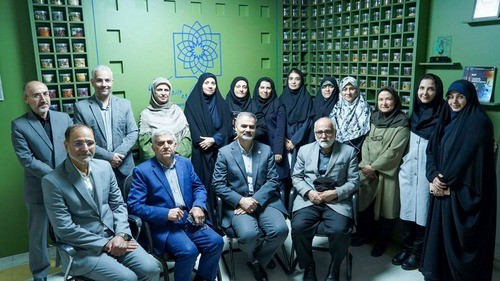
Coinciding with the first of Mehr 1405 (September 23, 2026), the Materia Medica Collection of the School of Traditional Medicine was unveiled in the presence of Dr. Piri, Executive Advisor to the University President; Dr. Rezaei-Zadeh, Secretary of the Headquarters for the Development of Science and Technology of Medicinal Plants and Traditional Medicine; Dr. Esmaili, Vice President of the University Council; Dr. Khodadoost; and Dr. Mosaddegh, along with a group of university professors and veterans.
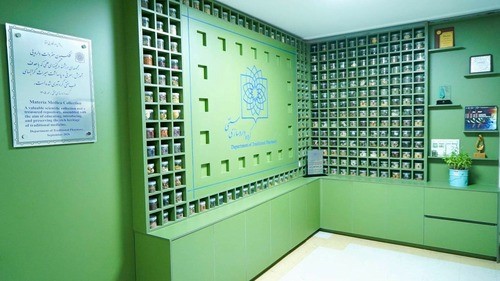
During the ceremony, the attendees visited the Materia Medica Collection and became acquainted with its educational and research capacities.
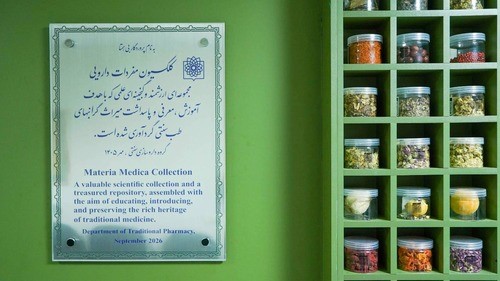
The Materia Medica Collection of the School of Traditional Medicine includes more than 200 samples of monographs commonly used in the pharmaceutical market. Each sample has been assigned a dedicated barcode. By scanning the barcode, documented information related to the sample—including its common name, scientific name, compounds, properties, applications, and natural products containing it—is made available.
This collection aims to preserve and document a part of the rich heritage of medicinal plants and traditional medicine. In addition to its scientific and documentary value, it provides considerable capacity for educational and research activities and can serve as a reference collection for students, faculty members, and researchers.
Access to authentic samples and their documented information enables more objective and precise education in the identification of Materia Medica, the study of medicinal properties, and research related to authenticity and the identification of herbal adulterations. This capacity can also contribute to the development of new research projects in the fields of medicinal plants and Iranian medicine.
The Dean of the School and a group of faculty members also attended the meeting. They presented a report on the School's activities and existing capacities and discussed potential areas of cooperation, as well as the development of ethnobotanical, research, and investigative projects.
Following the visit, the attendees also visited the School's Herbarium. With more than 10,000 herbarium specimens, the collection represents an important scientific and research capacity of the School. Information on its specimens is registered and indexed in the Virtual Herbarium of Vienna, Austria (VIEN). Part of the Herbarium's activities is also dedicated to ethnobotanical projects and the documentation of traditional knowledge related to plants.
At the conclusion of the visit, the importance of developing educational and research infrastructure, documenting plant and medicinal resources, utilizing the capacities of the Herbarium and Materia Medica Collection, and strengthening applied research was emphasized in support of the scientific activities of students and researchers.
Comment